



Főtaxi: About Főtaxi
Since its establishment the taxis of Főtaxi have done Sun-Earth distance multiplied by 58 during 95 years. It means the transportation of 280 million passangers by the legendary grey car, and later the checked car. As legal successor of Autótaxi Inc. which had been established in1913, Főtaxi became the most popular and reputable taxi company among city people. After its privatization in 1997, many modernizations have taken place in its car park.
The first thirty years
Taxi service started in the capital city on 1 June 1913 with 25 Marta-type cars equipped with taxameter. The first Martas and later the Magomobiles called 'lollypops' were followed by Fiats. The Magosixes, those 8-cylinder Ford V.8 type taxis were big, modern cars. Besides these the car park was extended with Ford-Eiffel and 1100 Fiat taxi cars. In the 30s, the Autótaxi company bought some impressive, black 2200 and 3600 cm3 Fords, mainly for tour rides. After 30 years, the company, together with its affiliated companies had 988 cars and 92 buses.
By building up the so-called drost-system (named after Tivadar Drost) - Budapest was first in it in the world - it became possible to order a taxi by phone in the 30s of the past century. The taxi ordered on the phone was sent from the nearest taxi stand to the customer. The performance of the phone centre rapidly grew. It started with18 orders a day and it increased to 4500 by the beginning of the fourties. This time the phone centre only dealt with 10-12 % of all rides.
The second thirty years
After the war Autótaxi Inc. continued work with 122 cars under the name of MOGÜRT Autótaxi National Company. Taxi licenses in private hands were withdrawn, so Autótaxi dominated the whole market. After two years Renault cars were added to the car park. These were the first cars decorated with red and white checked pattern as a distinction mark. From March 1948 taxi transport was taken over by the state. As a new development, Skoda 1102-s were bought.
The Council of Budapest took it over in 1951 and it was given the name Autótaxi Company of the Capital (Főtaxi). During the following years, Főtaxi bought Pobedas that could be heated, Warburgs arrived from former East-Germany and also Warsavas and Moskviches were added. In 1960 the number of cars rose over 900 and there were 100 taxi stands equipped with phones.
In the 60s Autótaxi developed rapidly. New premises were built to serve growing demands and the services were extended, for example with car hire. The phone centre and the Kerepesi road building had to be made bigger as well. By purchasing Fiat 124-s from Torino, the company founded the basis of Zsiguli program which went down in history as great business of the century. Therefore since 1971 Zsiguli became autocrat. This period took about 20 years. When celebrating 60th anniversary, the company could concentrate its power to prepare for the gasprogram to be able to reduce its costs. During this period the cars were equipped with radios. These taxis worked as traffic contollers. They were driving along the streets watching the needs and took immediate action. In these years the company hired part-time drivers as well, so a lot more than 2500 trained drivers and 1500 cars could work in the rush hours.
The third thirty years
Reliability became its main strength and philosophy of the company, when from the 60s it lost its monopol position on the market. After 1982 private cars returned to the streets. Főtaxi didn't introduce diverse tariff system. They wanted simple, clear tariffs to keep its customers. In the beginning of the 90s, Fiat cars renewed the car park once more. The 400 Fiat Tipos and Fiat Tempras determined Főtaxi's image for years. These were the years when -as it had happened many times before - gas-powered taxi came into the limelight. The idea of environment protection motivated their use. In 1993 the big company became an incorporation. Both the modernization of the car park and the image change helped the firm to keep its market leading position.
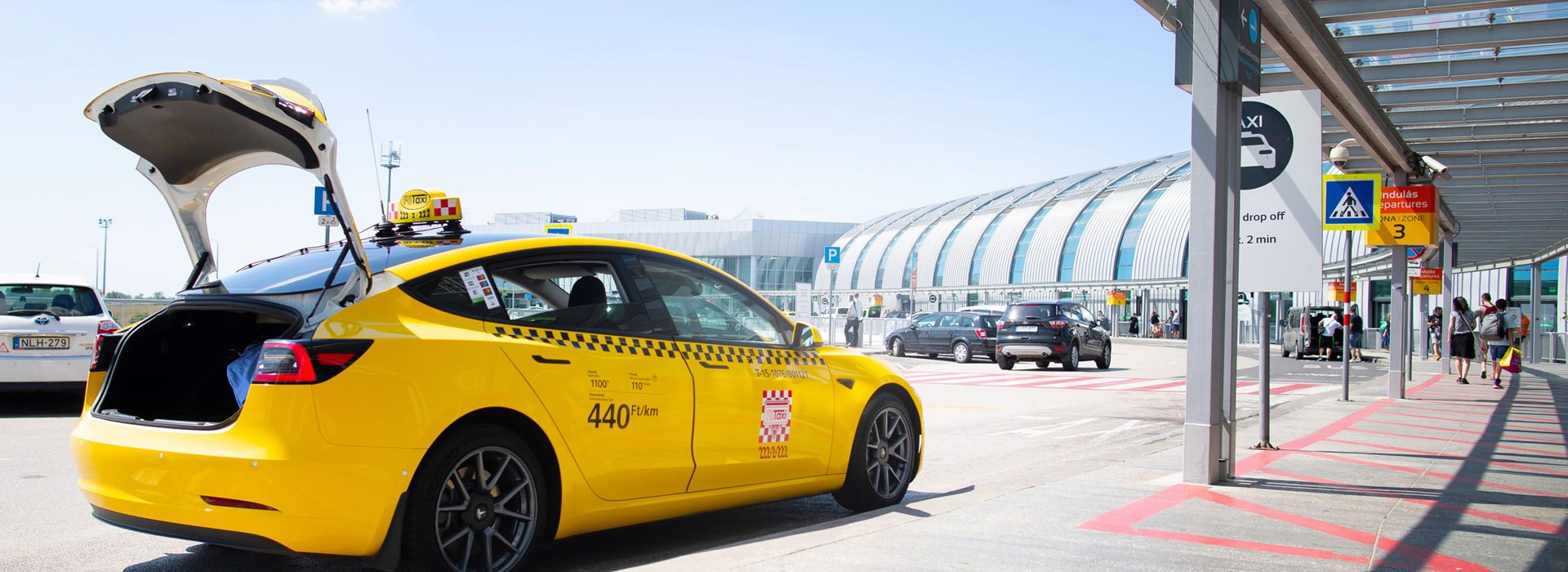
Főtaxi modernized its car park by preserving its yellow image, when in 1997 Fiat Brava and Opel Astra cars were put into the traffic. At the same time the rent-a-car part was extended by a range of Fiat Mareas and Puntos. However, finally Seat Toledo came out as 'winner', both in petrol and diesel versions. These 200 modern, mostly air-conditioned, yellow taxis that had a large boot provided a uniform image and popularized 'checked taxi' to a great extent.
Being a taxi is hard work for cars. Therefore changing them is an everyday issue in a taxi company. Of course purchase price is very important. There were cars that had better price than Toledos - the Nissans. 150 Nissan Primeras and Almeras were bought both to serve the demands of the taxi industry and also for long term rent. There's an other popular car among taxi drivers - the Skoda Oktavia. This car meets the needs of a taxi and has a good price, so this became the most frequently used one for Főtaxi drivers. In the past few years the image was cleared. Long term rent replaced hire. Cars owned by the company were sold and the drivers started working with their own cars. As the number of company cars were reduced, the service work changed a lot. The renewed franchise system fits the market and Főtaxi company which has more than 800 cars at the moment could permanently balance its management.